
Disability Pride Month: Frank Stephens and the Power of Self-Advocacy
At Shared Wellness, we hope to continually magnify the voices of the people we serve. Self-advocacy and self-determination are cornerstones of our philosophy, and this Disability Pride Month, we would like to highlight another role model who has shown how those with disabilities can use their voices to affect change. To wrap up this month’s series, we pay tribute to Frank Stephens, whose public speaking career has transformed public understanding about the capabilities and rights of those with Down syndrome and other intellectual disabilities. Frank Stephens' story reminds us that every person deserves the opportunity to speak for themselves, to be recognized for their strengths, and to help shape a more inclusive world.
John Franklin “Frank” Stephens was born into a world where a diagnosis of Down syndrome, a genetic developmental condition that leads to intellectual disability and certain physical characteristics, was widely regarded as devastating news. Parents of a baby with Down syndrome were routinely told that their child’s life would be short and unhappy, that they would be a “burden” on their family, and that it would be best to send their child to an institution for the rest of their life. Despite the massive strides that have been made in recent years, which have included educational and workplace support, independent living programs, and medical research that has more than doubled the average life expectancy of someone with Down syndrome, there is still a negative stigma attached to the diagnosis and a perception that it means that the person will never be capable of an independent or meaningful life.
At the age of eight, Stephens became involved in the Special Olympics, an organization which was created to combat stereotypes about intellectually disabled people and allowing them to show their full potential to lead happy and meaningful lives. In 2004, Stephens became an official Special Olympics Virginia Global Messenger and began a career of advocating for public acceptance of people with Down syndrome, which would eventually lead to him receiving the Quincy Jones Excellence in Advocacy Award.
He gained more recognition in 2012 when he wrote an open letter about the use of ableist slurs, in which he responded to Ann Coulter’s public use of the R-word by stating: “You, and society, need to learn that being compared to people like me should be considered a badge of honor. No one overcomes more than we do and still loves life so much.”
One of his most famous moments came in 2017, when he testified before Congress on behalf of GLOBAL Down Syndrome Foundation in response to proposed budget cuts that would have affected Down syndrome research. He pushed back against the outdated beliefs that his life didn’t have value, outlining his own accomplishments as well as the potential for success and happiness for others with Down syndrome. In a powerful moment, he stated: “If you take one thing away from today, know this: I am a man with Down syndrome and my life is worth living.” His speech received a standing ovation**—a rarity for a Congressional hearing—**and also went viral online with over 200 million views. Even more importantly, funding for Down syndrome research was subsequently increased.
Besides his Special Olympics career and advocacy work, Stephens has also worked as an author, a model and an actor. In a Q&A about his life and achievements, he expressed gratitude for the many opportunities that he has today that previous generations of people with Down syndrome did not have, and also expressed hope for the future: “In one generation we have gone from being placed in an institution to being invited to the White House. Maybe, in the next generation, we will go from an invitation to the White House to an election to the White House. It never hurts to dream big!” In response to those who still believe that the life of someone with Down syndrome is an unhappy and burdensome one, he simply stated: “God didn’t put me in the world to increase suffering. He put me here to increase acceptance. My life is worth living.”
Frank Stephens' advocacy reminds us that people with intellectual disabilities deserve to be heard, respected, and included in conversations that affect their own lives. His work has challenged misconceptions about Down syndrome and encouraged others to recognize the dignity, abilities, and contributions of people with intellectual disabilities. Stephens has also shown that people with Down syndrome and other intellectual disabilities can lead lives filled with the same happiness, purpose, and potential as anyone else. Contrary to the deeply ingrained stereotypes that were commonplace only a few short decades ago, he has demonstrated that disabled people can fully participate in society, advocate for their own rights, and pursue their own dreams. At Shared Wellness, we strive to foster that same spirit of self-determination by supporting the individuals we serve as they make choices, build relationships, pursue their goals, and participate fully in their communities.
As we conclude our Disability Pride Month series, we celebrate not only Frank Stephens' accomplishments, but also the countless self-advocates whose voices continue to expand opportunities and challenge outdated assumptions about disability. Their work reminds us that inclusion begins by listening to disabled people themselves and recognizing the value they bring to our communities, and ensuring that every person has the opportunity to speak for themselves, pursue their goals, and be respected as an equal member of society.
Further Reading
Special Olympics Virginia: Frank Stephens
C-SPAN: Frank Stephens' Opening Statement on Down Syndrome
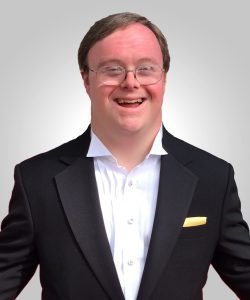
A portrait of Frank Stephens smiling at the camera. He is wearing a black suit jacket over a white dress shirt with a gold pocket square. The background is a plain light gray, drawing attention to his friendly expression.

